
Not Co-Parenting? Here’s How It Could Affect Your Custody Rights
Can you lose custody for not co parenting

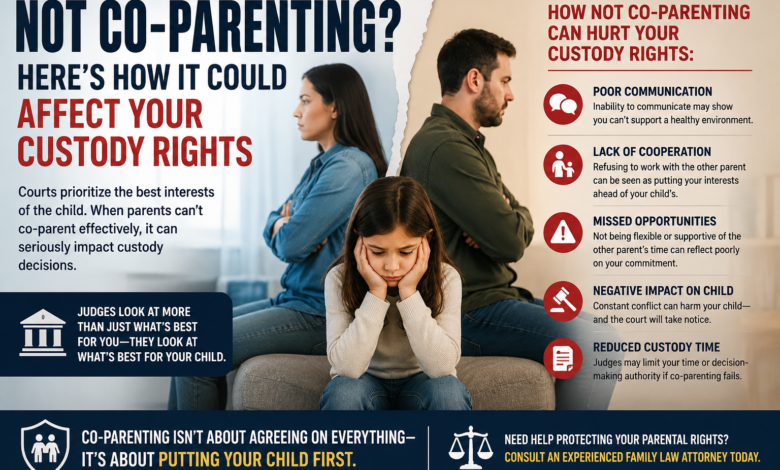
Separation and divorce are rarely easy — and when children are involved, the emotional stakes become even higher. One of the most common and damaging mistakes separated parents make is refusing to cooperate with the other parent. Whether driven by hurt, anger, or genuine concern, failing to co-parent effectively can have serious legal consequences. If you have ever asked yourself “can you lose custody for not co-parenting“ — the honest answer is yes, you can. And it happens more often than many parents realize.
This article breaks down exactly how poor co-parenting behavior is viewed by family courts, what specific actions can put your custody arrangement at risk, and what you can do to protect your parental rights.
What Does Co-Parenting Actually Mean?
Co-parenting refers to the ongoing shared responsibility of raising a child between two parents who are no longer in a romantic relationship. It does not require friendship or even warmth — it simply requires a functional, child-focused partnership that prioritizes the wellbeing of the child above personal grievances.
Effective co-parenting typically involves:
- Respecting and supporting the child’s relationship with the other parent
- Communicating clearly and respectfully about the child’s needs
- Following the agreed or court-ordered parenting plan
- Sharing important information about health, education, and welfare
- Avoiding conflict in front of the child
When one or both parents fail to meet these basic expectations, courts pay close attention — and they are not afraid to act.
Can You Lose Custody for Not Co-Parenting?
This is the question at the heart of many custody disputes. Can you lose custody for not co-parenting? Family law judges across the United States, United Kingdom, Australia, and most Western legal systems are guided by one overriding principle: the best interests of the child.
Co-parenting behavior is directly tied to that principle. A parent who consistently undermines the child’s relationship with the other parent, refuses to communicate, or violates parenting agreements is signaling to the court that they are placing their own emotional needs above those of their child.
Courts can and do respond to this in several ways:
- Modifying custody arrangements — reducing a parent’s physical or legal custody
- Transferring primary custody to the more cooperative parent
- Imposing supervised visitation on the non-compliant parent
- Holding a parent in contempt of court for violating a parenting order
The severity of the consequence depends on the pattern, frequency, and impact of the behavior — but make no mistake, judges notice.
Specific Behaviors That Can Cost You Custody

1. Parental Alienation
Parental alienation is one of the most serious co-parenting failures in the eyes of the law. It occurs when one parent systematically — whether consciously or unconsciously — works to damage or destroy the child’s relationship with the other parent.
This can include:
- Speaking negatively about the other parent in front of the child
- Telling the child that the other parent does not love them
- Intercepting or discouraging phone calls and messages
- Involving the child in adult disputes
- Encouraging the child to reject or fear the other parent
Courts treat parental alienation extremely seriously. If a judge determines that a parent is alienating the child from the other parent, it is one of the strongest grounds for a custody modification — including transferring primary custody to the targeted parent.
2. Withholding the Child from the Other Parent
Refusing to hand over a child for scheduled visitation — without a legitimate, documented safety reason — is a direct violation of a court order. Even one or two incidents can damage your credibility in court. A repeated pattern can result in:
- Loss of primary custody
- Contempt of court charges
- Fines or even imprisonment in serious cases
If you genuinely believe your child is unsafe with the other parent, the correct response is to seek an emergency court order — not to unilaterally withhold the child.
3. Refusing to Communicate
Co-parenting requires communication. When one parent stonewalls, ignores messages, or refuses to discuss child-related matters, it creates practical problems for the child and signals dysfunction to the court.
Judges expect parents to maintain a basic level of respectful communication about their child’s education, medical needs, extracurricular activities, and daily life. Persistent refusal to engage is viewed as placing adult conflict above the child’s welfare.
4. Violating the Parenting Plan
A court-approved parenting plan is a legal document. Violating it — whether by changing schedules without agreement, making unilateral decisions about the child’s education or healthcare, or relocating without consent — can trigger a custody review.
Even well-intentioned violations can be damaging. Always seek a formal modification through the court rather than acting unilaterally.
5. Undermining the Other Parent’s Authority
Consistently contradicting the other parent’s rules and boundaries, allowing behaviors the other parent has restricted, or telling the child they do not have to listen to the other parent all undermine co-parenting and confuse the child.
Courts look for parents who support a consistent, stable environment across both households. A parent who undermines the other’s authority is viewed as creating instability — which is never in the child’s best interest.
6. Using the Child as a Messenger or Spy
Sending messages through the child, asking the child to report on the other parent’s household, or using the child to gather information are all harmful behaviors that courts frown upon. They place an unfair emotional burden on the child and demonstrate poor judgment on the parent’s part.
7. Denying Access to Important Information
Both parents typically have the legal right to be informed about their child’s medical care, school performance, and major life events. Deliberately withholding this information — failing to notify the other parent about a school meeting, doctor’s appointment, or significant incident — can be grounds for a custody modification.
What Family Court Judges Actually Look For
When evaluating co-parenting behavior, judges consider:
- Pattern of behavior — is this a one-off incident or a consistent pattern?
- Impact on the child — is the child showing signs of distress, anxiety, or behavioral changes?
- Willingness to cooperate — does the parent show any willingness to improve?
- Documentation — what evidence exists of the behavior (text messages, emails, witness accounts)?
- History of the custody arrangement — has the co-parenting breakdown been recent or longstanding?
Judges are experienced at seeing through adult conflict. Their focus is always on what arrangement best serves the child — and a parent who demonstrates that they cannot set aside personal grievances for the sake of their child rarely comes across well in court.
Real Consequences: What Courts Can Order

If a judge determines that poor co-parenting is harming the child or violating court orders, the consequences can include:
| Behavior | Possible Court Response |
|---|---|
| Parental alienation | Custody transfer, mandatory therapy |
| Withholding visitation | Contempt of court, make-up parenting time |
| Repeated communication refusal | Mandatory co-parenting classes |
| Violating parenting plan | Modification of custody arrangement |
| Relocation without consent | Return order, custody review |
| Using child as messenger | Supervised visitation, guardian ad litem appointed |
Can You Lose Custody for Not Co-Parenting — Even If You Are the Primary Caregiver?
Yes. This is an important point that many primary caregivers do not fully appreciate. Being the primary caregiver does not grant immunity from custody consequences. In fact, primary caregivers are often held to a higher standard because they have more influence over the child’s day-to-day life and relationship with the other parent.
Can you lose custody for not co-parenting even when you have been the more involved parent? Absolutely — if your behavior is consistently obstructive, alienating, or in violation of court orders, a judge may determine that transferring primary custody to the other parent better serves the child’s interests.
Family courts have made exactly this call in numerous high-profile cases. The message is consistent: no amount of parenting involvement excuses deliberate interference with the child’s right to a meaningful relationship with both parents.
What to Do If You Are Struggling to Co-Parent
Co-parenting is genuinely hard — especially in the aftermath of a painful separation. Here is what experts and family lawyers recommend:
1. Use a Co-Parenting App
Tools like OurFamilyWizard, TalkingParents, or Cozi provide structured, documented communication between parents. They reduce conflict, keep records, and demonstrate good faith to the court if needed.
2. Work with a Family Mediator
A trained mediator can help both parents establish workable communication and agreements outside of court. Mediation is typically faster, cheaper, and less adversarial than litigation.
3. Attend Co-Parenting Counseling or Classes
Many family courts now offer or require co-parenting education programs. Taking one voluntarily — before being ordered to — demonstrates maturity and commitment to your child’s wellbeing.
4. Keep Records
Document all communication, schedule changes, and incidents. If the other parent is the one failing to co-parent, your records will be invaluable in court.
5. Consult a Family Law Attorney
If co-parenting has broken down seriously and you are concerned about your custody rights — or believe the other parent is alienating your child — speak to a qualified family law attorney as soon as possible. Early legal advice can protect your rights and help you respond appropriately.
Protecting Your Custody Rights Going Forward
If you are asking “can you lose custody for not co-parenting” — you are already asking the right question. Awareness is the first step. Here is a quick checklist to protect your custody rights:
- ✅ Always follow the court-approved parenting plan
- ✅ Communicate in writing where possible (creates a record)
- ✅ Never speak negatively about the other parent in front of your child
- ✅ Support your child’s relationship with the other parent
- ✅ Notify the other parent promptly about medical, educational, and welfare matters
- ✅ Seek a formal court modification rather than acting unilaterally
- ✅ Document any violations by the other parent calmly and factually
- ✅ Consider mediation before returning to court
Final Thoughts
The family court system is not designed to punish parents — it is designed to protect children. When co-parenting fails, it is almost always the child who suffers most. Courts know this, and they respond accordingly.
So can you lose custody for not co-parenting? Yes — and the consequences can range from a formal warning to a complete transfer of custody. The good news is that co-parenting skills can be learned, improved, and demonstrated over time. It is never too late to choose your child’s wellbeing over adult conflict.
Your child needs both parents. The court will always prioritize that — and so should you.