


If you’ve spent enough time around options traders, you’ve probably heard the phrase “max pain” tossed around like a secret code. It sounds dramatic—almost like a Hollywood term—but in the world of markets, it’s simply another tool that investors use to understand short-term price pressure. And when it comes to the SPY ETF, the concept of spy max pain often becomes a surprisingly useful compass for traders trying to make sense of market behavior.
What Exactly Is Max Pain?
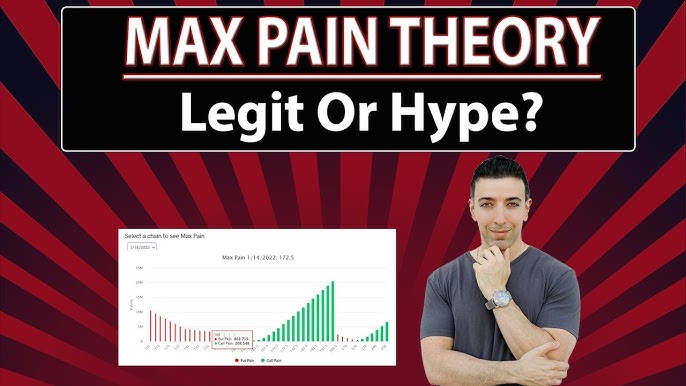
Max pain refers to the price level at which the largest number of options—both calls and puts—expire worthless. It’s essentially the point where option sellers (usually institutions, not small retail traders) lose the least money, and option buyers lose the most.
The theory is simple:
When a large number of open options contracts are clustered around certain strike prices, price action often gravitates toward the level where the market makers face the smallest payout.
For SPY, which is one of the most heavily traded ETFs on the planet, this dynamic becomes even more pronounced.
Why SPY Behaves Differently
SPY trades like the heartbeat of the U.S. stock market. Millions of contracts change hands every single day. Because of this, the spy max pain level can shift rapidly—sometimes within hours—reflecting the tug-of-war between buyers, sellers, and institutions hedging billions of dollars.
On days with high volatility, SPY may drift in a way that seems irrational on the surface, but when you zoom out and look at the max pain level, things often start to make sense. The price frequently “magnetizes” toward the point of least payout for market makers, especially near weekly or monthly options expiration.
It’s not manipulation as much as it is the natural consequence of hedging, liquidity, and overwhelming options volume.
A Quick Real-World Example
Imagine it’s a Friday morning, and SPY is trading around 504. Options expiring that day show heavy open interest at strikes 500, 505, and 510. But the max pain level sits around 505.
Throughout the day, SPY keeps bouncing between 503 and 506—frustrating both bulls and bears—only to close right near 505.
If you look at the chart alone, it feels like noise.
But through the lens of spy max pain, it looks more like a natural gravitational pull.
Why Traders Pay Attention
Max pain isn’t a magic formula. It won’t predict long-term direction, and it definitely won’t replace proper analysis. But it does help traders understand one important thing: short-term pressure points.
Here’s why smart investors keep it in their toolkit:
-
It reveals where options sellers are comfortable.
-
It highlights “magnet” price zones during expiration weeks.
-
It helps explain sudden reversals or slow drifts toward specific levels.
-
It gives context to unusually muted or exaggerated market moves.
Even long-term investors find value in watching the max pain level during major expiration dates, because large shifts in SPY often spill over into individual stocks.
Limitations You Should Know
Every seasoned trader eventually learns that no indicator is perfect, and spy max pain has its flaws too:
-
It’s not a directional predictor—just a pressure point.
-
Surprise news can override it instantly.
-
Market makers don’t force price to hit max pain; hedging just nudges it in that direction.
-
It works better on high-volume expiration days than normal trading sessions.
Think of it like weather forecasting: helpful, but never absolute.
How to Use It Without Overusing It
If you’re a newer investor, start simple.
Watch how SPY behaves on Thursdays and Fridays—especially monthly OPEX. Notice how often price drifts toward the published max pain level. Over time, patterns begin to emerge.
Use max pain as a supporting indicator, not the foundation of your strategy.
Combine it with volume, trend analysis, and macro conditions.
A balanced approach always outperforms a single-tool mindset.
Final Thoughts
The market is a complex place, filled with noise, emotion, and hidden forces that shape price action. Understanding concepts like spy max pain doesn’t turn you into a professional trader overnight, but it gives you a clearer lens to interpret seemingly odd market movements.
Smart investors don’t aim to predict the future—they aim to understand the present.
And in the constantly moving world of SPY options, max pain is one of the simplest ways to read the short-term pulse of the market.