New parents examine their baby closely, often several times a day, and it doesn’t take long before something small but startling catches their eye — a little bump, callus, or blister right on the center of the baby’s upper lip. If you’ve noticed this and searched for answers, you’ve likely landed on the term milk blisters on newborn lips, and you’re probably wondering whether it’s something to worry about, something to treat, or simply a normal part of infant development.
The good news is that in the vast majority of cases, milk blisters on newborn lips are completely harmless and even a sign that breastfeeding or bottle-feeding is going well. This article walks through exactly what these blisters are, why they form, how to care for them, and the rare situations where they might warrant a call to your pediatrician.
What Exactly Is a Milk Blister?
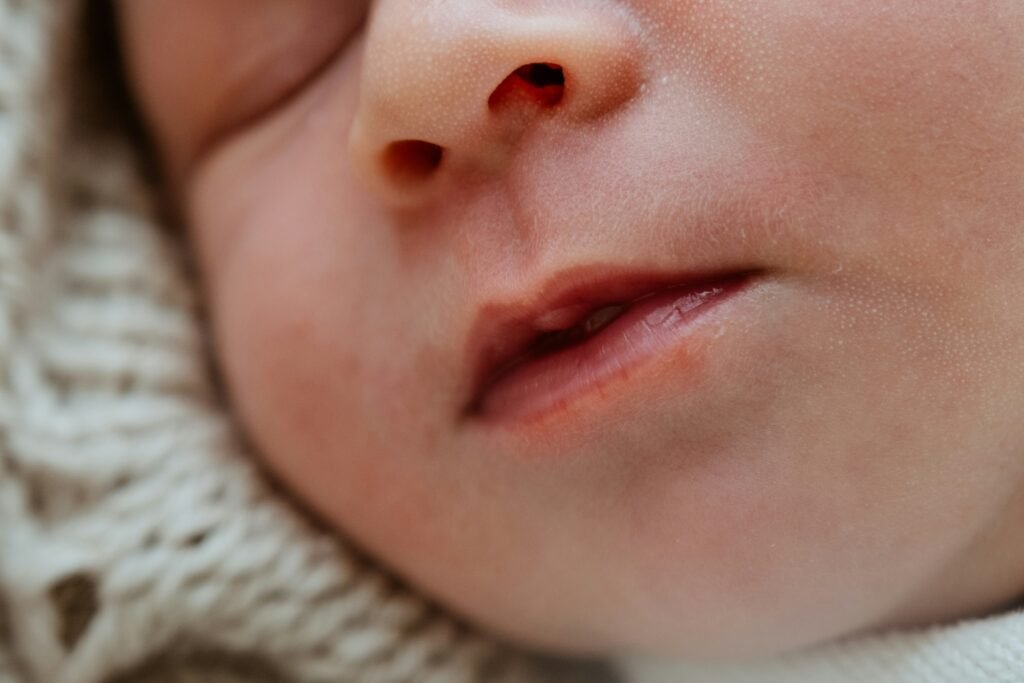
A milk blister, sometimes called a “sucking blister” or “sucking callus,” is a small, raised area of skin — typically pale, white, or slightly translucent — that forms on a baby’s upper lip, usually right in the center. It can look like a tiny water blister, a patch of dry or peeling skin, or a firm little callus, depending on the stage of its development. Milk blisters on newborn lips are extremely common, especially in the early weeks of life when feeding patterns are still being established and babies are nursing or bottle-feeding frequently.
Despite the somewhat alarming appearance, this is not an infection, not a symptom of illness, and not related to the milk itself. The name is a bit misleading — the blister isn’t caused by milk touching the lip, but by the mechanical action of feeding.
What Causes Milk Blisters on Newborn Lips?

1. Friction From Sucking
The primary cause of milk blisters on newborn lips is repeated friction. When a baby latches onto a breast or bottle, the lip skin rubs against the nipple or bottle teat repeatedly during each feeding session. Newborns feed extremely often — sometimes every one to three hours around the clock — so that friction adds up quickly, especially in the first few weeks before the skin has had time to toughen slightly.
2. Strong Suck Reflex
Newborns are born with a powerful sucking reflex that helps them feed efficiently and survive. Some babies simply suck with more vigor than others, and a stronger, more forceful suck increases the friction and pressure on the delicate lip tissue, making a blister more likely to form.
3. Skin That Is Still Very Delicate
A newborn’s skin — especially on the lips — is thin, delicate, and still adjusting to life outside the womb. This tender skin is more prone to developing blisters or calluses from repetitive contact than the thicker skin of an older infant or child.
4. Latch and Feeding Position
Sometimes a shallow latch or a particular bottle-feeding angle can increase friction on one specific part of the lip, making a blister more likely to form in that exact spot. This is part of why milk blisters on newborn lips are so often centered precisely in the middle of the upper lip — that’s typically the point of greatest contact and pressure during feeding.
5. Pacifier Use
Babies who use a pacifier frequently can also develop similar friction blisters, for the same reasons as breastfeeding or bottle-feeding: repeated rubbing against delicate lip skin.
What Do Milk Blisters Look Like?
Milk blisters on newborn lips can appear in a few different forms, and it’s helpful for parents to know what’s considered typical:
- A small white or pale bump in the center of the upper lip
- A translucent, fluid-filled blister, similar in appearance to a small water blister
- A dry, peeling, or slightly cracked patch of skin
- A firmer, callus-like bump that has thickened over time with repeated feeding
The blister may come and go, appearing more prominent right after a feeding session and less noticeable between feeds. Some babies develop one that lasts for weeks or months, while others have blisters that appear and disappear repeatedly as feeding patterns change.
Are Milk Blisters Painful for the Baby?
This is one of the most common questions parents ask, and the reassuring answer is that milk blisters on newborn lips are typically not painful and do not interfere with feeding. In fact, many babies with a visible blister continue to nurse or bottle-feed with no signs of discomfort, fussiness, or feeding refusal. The blister is essentially a callus forming in response to normal, repetitive use — much like a small callus that might form on an adult’s hand from repeated activity.
If a baby does show signs of pain or distress during feeding, it’s worth looking closer to rule out other causes, which are covered in the “when to worry” section below.
How to Care for Milk Blisters on Newborn Lips
The standard recommendation from pediatric sources is refreshingly simple: in most cases, no treatment is necessary at all. Here are the general care guidelines:
Leave It Alone
Avoid popping, picking at, or squeezing the blister. Doing so could introduce bacteria into broken skin and create a real risk of infection where none existed before.
Keep the Area Clean
Simply wiping the baby’s mouth and lips gently with a soft, damp cloth after feedings is usually sufficient. No special soaps, ointments, or ointments are typically needed.
Avoid Applying Unnecessary Products
Unless a pediatrician specifically recommends it, avoid applying lotions, creams, or lip balms to the blister. A newborn’s lips don’t need moisturizing products, and unnecessary application could irritate the area further or pose an ingestion risk.
Monitor Feeding Comfort
Keep an eye on whether the baby seems comfortable while feeding. If nursing, watch for a comfortable latch; if bottle-feeding, ensure the flow rate and nipple shape are appropriate for the baby’s age.
Let It Heal Naturally
Milk blisters on newborn lips typically resolve on their own as the skin adjusts and toughens slightly with continued feeding, or as feeding patterns become less frequent. Most blisters fade gradually over weeks to a few months without any intervention.
When Do Milk Blisters Typically Go Away?
There’s no single universal timeline, since it depends on the individual baby, feeding frequency, and latch. Some blisters fade within a couple of weeks, while others persist for a couple of months, particularly if the baby continues feeding frequently with the same latch pattern. As babies grow, their feeding sessions typically become less frequent and their skin becomes slightly more resilient, both of which usually lead to the blister fading on its own.
When to Worry: Signs That Warrant a Call to the Pediatrician
While milk blisters on newborn lips are usually nothing to be concerned about, there are situations where it’s wise to reach out to a healthcare provider rather than assuming it will resolve on its own.
Signs of Infection
Contact your pediatrician if you notice:
- Redness spreading beyond the blister itself
- Increasing swelling
- Pus or unusual discharge
- Warmth around the area
- A foul odor
Signs of Pain or Feeding Difficulty
Reach out if your baby:
- Cries or fusses specifically when the lip area is touched
- Refuses to feed or seems to feed less than usual
- Shows signs of poor weight gain
Blisters That Look Unusual
Not everything that appears on a newborn’s lip is a friction-related milk blister. Contact a provider if you notice:
- Blisters appearing in clusters, rather than a single spot
- Blisters spreading to other parts of the mouth, face, or body
- Blisters accompanied by fever
- A blister with an unusual color (deep red, purple, or black)
These could indicate something other than a typical friction blister — such as a cold sore (oral herpes), a bacterial infection, or another skin condition — and deserve a professional evaluation rather than home guesswork.
Persistent Blisters With No Improvement
If a blister has been present for several months with no signs of fading, or seems to be getting larger rather than smaller over time, it’s reasonable to mention it at a well-baby checkup even without other alarming symptoms.
How to Tell a Milk Blister Apart From Other Conditions
Parents sometimes worry that a bump on the lip might be something more serious, like a cold sore, thrush, or an allergic reaction. Here’s a general (not diagnostic) way to think about the differences:
| Feature | Milk Blister | Cold Sore (Oral Herpes) | Oral Thrush |
|---|---|---|---|
| Location | Center of upper lip | Can appear on lip edge or around mouth | Inside the mouth (cheeks, tongue) |
| Appearance | Single white/pale bump or callus | Cluster of small, painful blisters | White patches that don’t wipe off easily |
| Pain | Usually painless | Often painful or tender | Can cause fussiness during feeding |
| Cause | Feeding friction | Viral infection | Fungal (yeast) overgrowth |
This table is meant to help parents understand general patterns, not to replace a medical diagnosis. Any uncertainty should always be directed to a pediatrician, who can examine the baby directly.
Tips to Minimize Friction and Reduce Blister Formation
While milk blisters on newborn lips are largely unavoidable for many babies, a few practical steps may help reduce friction:
- Work on latch technique — A lactation consultant can help assess and improve a shallow or uneven latch that may be increasing friction on one part of the lip.
- Choose an appropriate bottle nipple — If bottle-feeding, using a nipple shape and flow rate suited to your baby’s age and feeding style can reduce excess friction.
- Avoid overly aggressive wiping — When cleaning the baby’s face after feeds, use gentle dabbing motions rather than vigorous rubbing directly over the blistered area.
- Limit unnecessary pacifier use if a blister has formed, especially if the pacifier shape seems to rub against the same spot repeatedly.
A Reassuring Perspective for Parents
It’s completely understandable to feel a jolt of worry the first time you spot something unusual on your newborn’s face — parents are wired to notice even the smallest changes. But milk blisters on newborn lips are, in the overwhelming majority of cases, a normal and even encouraging sign: they often indicate that your baby is feeding actively and frequently, exactly as expected in the early weeks of life.
Rather than a red flag, think of it as a small, temporary marker of all the hard work your baby is doing to nourish and grow. With gentle care, patience, and a watchful eye for the specific warning signs outlined above, most milk blisters resolve on their own without any lasting effect.
Final Thoughts
Milk blisters on newborn lips are one of those small, slightly alarming details of early parenthood that turn out to be far less serious than they look. Caused by the natural friction of frequent feeding, these blisters are typically painless, require no treatment, and fade on their own as your baby grows and feeding patterns evolve. Keep the area clean, resist the urge to pop or pick at it, and trust that in most cases, time and continued feeding will resolve it naturally.
That said, no article can replace a hands-on evaluation from your pediatrician. If you ever notice signs of infection, unusual blister patterns, fever, or feeding difficulties alongside the blister, don’t hesitate to reach out to your baby’s healthcare provider. When in doubt, a quick check-in is always worth the peace of mind.